Introduction & Background
In today’s fast-paced, data-driven world, businesses and organizations are constantly seeking ways to anticipate future trends, mitigate risks, and make informed decisions. Predictive modeling has emerged as a powerful tool that transforms raw data into actionable insights, enabling stakeholders to unlock future possibilities with greater accuracy. From healthcare and finance to marketing and supply chain management, the applications of predictive modeling are vast and transformative. As data continues to grow in volume and complexity, the ability to harness predictive modeling becomes not just an advantage but a necessity for staying competitive and resilient in an unpredictable landscape.
Concept & Overview
At its core, predictive modeling is a branch of advanced analytics that uses statistical techniques, machine learning algorithms, and historical data to forecast future outcomes. Unlike traditional descriptive analytics, which focuses on summarizing past events, predictive modeling looks ahead, identifying patterns and relationships that can predict what is likely to happen next. These models are built using a combination of data inputs, algorithms, and computational power, and they can be continuously refined as new data becomes available. Whether it’s predicting customer behavior, disease outbreaks, or stock market fluctuations, predictive modeling serves as a bridge between data and decision-making, turning uncertainty into informed strategy.
Key Features & Highlights
- Data-Driven Insights: Predictive models rely on large datasets to uncover hidden patterns, trends, and correlations that human analysis might overlook.
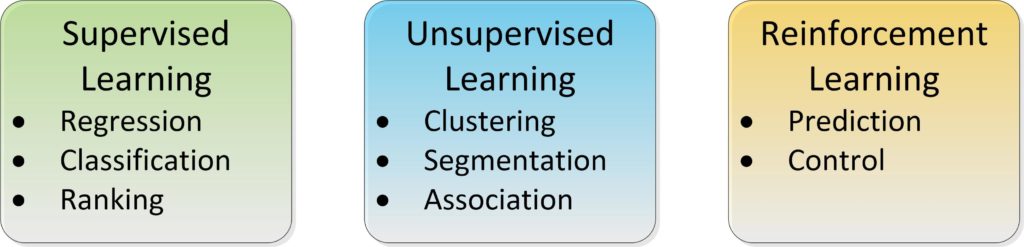
- Algorithmic Diversity: Various algorithms, such as linear regression, decision trees, neural networks, and ensemble methods, can be applied depending on the problem and data structure.
- Real-Time Adaptability: Modern predictive models can be updated in real time, allowing businesses to respond dynamically to changing conditions.
- Risk Mitigation: By identifying potential risks before they materialize, predictive modeling helps organizations take preventive action, reducing financial and operational losses.
- Personalization at Scale: In sectors like marketing and healthcare, predictive models enable highly personalized recommendations and interventions tailored to individual needs or behaviors.
- Scalability: Predictive modeling solutions can scale from small datasets to enterprise-level analytics, accommodating diverse business needs and resource levels.
Frequently Asked Questions / Pros & Cons
What is the primary goal of predictive modeling?
The primary goal is to forecast future events or behaviors based on historical and current data, enabling better decision-making and strategic planning.
Is predictive modeling the same as artificial intelligence?
While predictive modeling is a subset of artificial intelligence, it is not the same. AI is a broader field that includes predictive modeling along with other capabilities like natural language processing and robotics. Predictive modeling specifically focuses on forecasting outcomes using data.
What types of data are most suitable for predictive modeling?
Structured data, such as numerical records, transaction histories, and categorical variables, are commonly used. However, unstructured data, such as text and images, can also be incorporated using advanced techniques like natural language processing and computer vision.
What are the main advantages of using predictive modeling?
- Enhances decision-making by providing data-backed insights.
- Increases operational efficiency and reduces costs by anticipating issues.
- Improves customer satisfaction through personalized experiences.
- Enables proactive risk management across industries.
Are there any limitations or challenges associated with predictive modeling?
- Data quality is critical. Poor or biased data can lead to inaccurate predictions.
- Overfitting occurs when a model performs well on training data but fails to generalize to new data.
- Predictive models require continuous monitoring and updating to remain relevant.
- Ethical concerns arise regarding data privacy and the responsible use of predictions.
Practical Guidance & Solutions
Implementing predictive modeling successfully begins with a clear understanding of business objectives. Start by defining the problem you want to solve. Is it customer churn, fraud detection, or demand forecasting? Next, ensure your data is clean, well-organized, and representative of the real-world scenario. Invest in quality data collection, storage, and preprocessing tools to build a solid foundation.
Choosing the right algorithm depends on the nature of your data and the problem at hand. For example, logistic regression may work well for binary classification tasks, while time-series forecasting might require ARIMA or LSTM models. Many organizations benefit from using platforms that offer automated machine learning, which can streamline model selection and tuning.
Validation is another critical step. Use techniques like cross-validation and holdout datasets to test model performance before deployment. Once deployed, monitor the model’s predictions in real time and collect feedback to refine it continuously. Finally, foster a culture of data literacy within your organization so that decision-makers understand the insights and can act confidently.
For businesses new to predictive modeling, starting with pilot projects can help build expertise and demonstrate value without large upfront investments. Collaboration between data scientists, domain experts, and business leaders is essential to ensure models align with organizational goals and deliver measurable impact.
Conclusion
Predictive modeling is more than a technological trend; it is a transformative capability that empowers organizations to see beyond the present and prepare for the future with confidence. By converting data into foresight, predictive modeling unlocks new opportunities across industries, from optimizing supply chains to personalizing customer experiences and safeguarding public health. While challenges such as data quality and model interpretability persist, the benefits far outweigh the risks for those who adopt a thoughtful, strategic approach. As data continues to evolve and grow, the organizations that embrace predictive modeling today will be the ones shaping the decisions of tomorrow. Ultimately, the future belongs not just to those who have the most data, but to those who know how to use it wisely to predict, prepare, and prosper.