Introduction & Background
Deep learning has emerged as one of the most transformative forces in modern technology, reshaping industries and pushing the boundaries of what machines can achieve. At its core, deep learning is a subset of artificial intelligence that mimics the way humans learn by processing vast amounts of data through layered neural networks. This approach has unlocked remarkable capabilities, from recognizing speech and translating languages to diagnosing diseases and even creating art. As data becomes more abundant and computational power grows, the significance of deep learning continues to expand, offering solutions to complex problems that were once thought impossible for machines to solve.
The journey of deep learning traces back to earlier attempts at artificial intelligence, but it gained momentum in the early 2000s with breakthroughs in computational efficiency and algorithmic advancements. Today, it powers many of the technologies we interact with daily, such as virtual assistants, recommendation systems, and autonomous vehicles. By bridging the gap between raw data and actionable insights, deep learning is not just a tool for automation but a gateway to machines that can think and learn in ways that resemble human cognition.
Concept & Overview
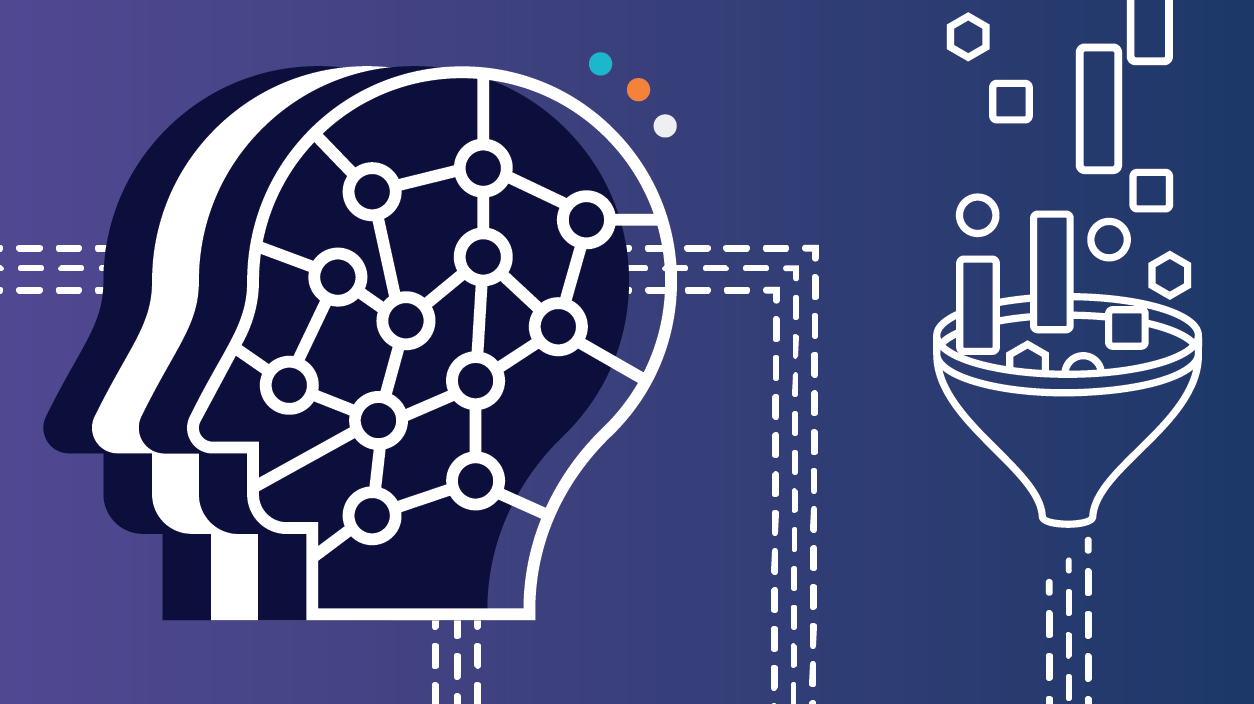
Deep learning is rooted in the architecture of artificial neural networks, which are designed to simulate the human brain’s structure and function. Unlike traditional machine learning models that rely on handcrafted features, deep learning models automatically extract relevant patterns from data through multiple layers of interconnected nodes, or neurons. Each layer processes information at an increasing level of abstraction, allowing the model to learn hierarchical representations of the input data.
The term “deep” in deep learning refers to the number of layers in these neural networks. While shallow networks may have just one or two layers, deep networks can contain dozens or even hundreds, enabling them to model highly complex relationships. This depth allows the system to handle unstructured data such as images, audio, and text, making it uniquely suited for tasks like image classification, natural language processing, and speech recognition. The ability to learn from raw data without extensive preprocessing is a defining advantage of deep learning, setting it apart from earlier AI methodologies.
Key Features & Highlights
- Automatic Feature Extraction: Deep learning models eliminate the need for manual feature engineering by learning relevant features directly from the data, making them highly adaptable to different types of inputs.
- Scalability: These models thrive on large datasets, improving their performance as more data becomes available. This scalability is essential for applications in fields like genomics and climate modeling.
- Versatility: Deep learning can be applied across diverse domains, including healthcare, finance, robotics, and entertainment, demonstrating its flexibility and broad utility.
- High Accuracy: Thanks to their ability to model intricate patterns, deep learning systems often achieve state-of-the-art performance in tasks such as image recognition and language translation.
- End-to-End Learning: Many deep learning models are designed to process raw input and produce output in a single pipeline, reducing the need for intermediate steps and simplifying the overall system architecture.
Frequently Asked Questions / Pros & Cons
What is the difference between deep learning and traditional machine learning?
Traditional machine learning relies on feature extraction methods designed by humans, whereas deep learning automatically identifies and learns these features from raw data. Additionally, deep learning models typically require larger datasets and more computational resources due to their complexity.
Can deep learning models understand context like humans do?
While deep learning models excel at pattern recognition and can capture contextual relationships in data, they do not possess true understanding or consciousness. Their “understanding” is statistical rather than conceptual, meaning they can mimic certain aspects of human reasoning but lack genuine comprehension or intent.
What are the main challenges in implementing deep learning?
Key challenges include the need for massive amounts of labeled data, high computational costs for training complex models, and the interpretability of results. Overfitting, where a model performs well on training data but poorly on unseen data, is another common issue that requires techniques like regularization and dropout to mitigate.
Pros and Cons
Pros:
- Exceptional performance on tasks involving unstructured data.
- Reduces the need for manual feature engineering.
- Adaptable to a wide range of applications.
Cons:
- Requires significant computational power and resources.
- Demands large volumes of high-quality training data.
- Often operates as a “black box,” making it difficult to interpret decisions.
Practical Guidance & Solutions
For those looking to implement deep learning, the first step is to clearly define the problem and identify the type of data available. If the dataset is small, consider using transfer learning, where a pre-trained model is fine-tuned on the specific task. This approach leverages existing knowledge and reduces the need for extensive training data.
Investing in adequate computational resources is crucial, especially for training large models. Cloud-based platforms like AWS, Google Cloud, and Microsoft Azure offer scalable solutions for deep learning workloads. Additionally, frameworks such as TensorFlow, PyTorch, and Keras provide robust tools for building and deploying models efficiently.
To improve model performance, focus on data quality and diversity. Augmentation techniques, such as rotating or flipping images, can artificially expand the dataset and help prevent overfitting. Regularly evaluate the model using validation metrics and cross-validation techniques to ensure it generalizes well to new data. Finally, consider model interpretability tools like SHAP or LIME to gain insights into how decisions are made, which is particularly important in high-stakes applications like healthcare.
Conclusion
Deep learning stands at the forefront of the AI revolution, offering unprecedented opportunities to harness the power of data and transform industries across the globe. By mimicking the human brain’s ability to learn from experience, these models have unlocked capabilities that were once the stuff of science fiction. While challenges remain in terms of data requirements, computational demands, and interpretability, ongoing advancements in algorithms, hardware, and methodologies continue to push the boundaries of what is possible.
The future of deep learning is bright, with potential applications spanning from personalized medicine to climate prediction and beyond. As researchers and practitioners refine their approaches, the line between machine intelligence and human cognition will continue to blur. For now, deep learning remains a powerful tool that empowers machines to process, analyze, and act on information with a sophistication that increasingly mirrors our own. Embracing this technology today not only enhances our capabilities but also paves the way for a smarter, more connected world tomorrow.