The Invisible Backbone Powering Tomorrow’s Digital World
In an era where technology evolves at breakneck speed, one force remains quietly transformative yet often unseen: cloud services. These digital powerhouses form the invisible backbone of modern innovation, enabling businesses, governments, and individuals to operate, collaborate, and innovate without being shackled by physical infrastructure. From streaming the latest movie to managing global supply chains, cloud services are the silent enablers behind nearly every digital interaction we encounter today.
But what exactly are cloud services, and why do they matter so profoundly? At their core, cloud services are remote computing resources—servers, storage, databases, networking, software, analytics, and more—that are delivered over the internet on a pay-as-you-go basis. Unlike traditional on-premises IT setups, which require substantial capital investment and maintenance, cloud services offer scalability, flexibility, and accessibility that were once unimaginable. They allow organizations to focus on their core missions instead of managing hardware and software dependencies.
As we peer into the future, the role of cloud services is poised to expand even further. They are not just tools—they are the foundational layer upon which the next wave of technological revolutions will be built. From artificial intelligence and machine learning to the Internet of Things (IoT) and edge computing, cloud services provide the agility and computational power necessary to turn visionary ideas into reality.
—
What Are Cloud Services?
Cloud services refer to a broad spectrum of computing services delivered via the internet. These services are hosted and managed by third-party providers who own and operate large data centers filled with powerful servers and storage systems. Users—whether individuals, small businesses, or global enterprises—access these resources remotely through the internet, often without needing to understand the underlying infrastructure.
The concept of cloud services is rooted in the principle of abstraction. Just as we don’t need to know how electricity is generated to turn on a light switch, cloud users don’t need to understand the physical servers or networking equipment that power their applications. All they need is a connection to the internet and the right credentials.
Cloud services are typically categorized into three main service models:
- Infrastructure as a Service (IaaS): Provides virtualized computing resources over the internet. This includes virtual machines, storage, and networking. Users have control over the operating systems and applications but not the underlying hardware. Examples include Amazon Web Services (AWS) EC2 and Microsoft Azure Virtual Machines.
- Platform as a Service (PaaS): Offers a platform that allows developers to build, test, and deploy applications without managing the underlying infrastructure. This includes tools, libraries, and services needed for application development. Examples include Google App Engine and Heroku.
- Software as a Service (SaaS): Delivers fully functional software applications over the internet. Users access the software through a web browser or app, and the provider handles all maintenance, updates, and security. Examples include Gmail, Microsoft 365, and Salesforce.
Beyond these core models, cloud services also include specialized offerings like serverless computing, container services, data analytics platforms, and AI/ML tools. Each model serves distinct needs, allowing businesses to choose the level of control and customization they require.
—
The Evolution of Cloud Services: From Concept to Global Standard
The journey of cloud services began in the early 2000s when companies like Amazon, Google, and Microsoft started exploring ways to optimize their massive data centers. Amazon Web Services (AWS), launched in 2006, is widely credited with pioneering the modern cloud computing industry by introducing scalable, on-demand computing resources to the public. This marked a pivotal shift from traditional IT models to a more flexible, cost-effective paradigm.
In the early days, cloud adoption was cautious. Many organizations were hesitant to entrust their critical data to third-party providers due to concerns about security, reliability, and compliance. However, as cloud providers demonstrated robust security measures, high availability, and compliance certifications, trust began to grow. Today, cloud services are not just a luxury—they are a necessity for businesses seeking to remain competitive in a digital-first world.
The evolution of cloud services has been marked by several key milestones:
- 2006: AWS launches, offering cloud computing on demand.
- 2008: Google App Engine debuts, bringing PaaS to the mainstream.
- 2010: Microsoft Azure enters the market, competing directly with AWS.
- 2011: Cloud computing adoption accelerates as enterprises realize cost savings and scalability benefits.
- 2015: The rise of hybrid and multi-cloud strategies allows businesses to combine public and private clouds for greater flexibility.
- 2020: The COVID-19 pandemic forces a rapid digital transformation, with cloud services enabling remote work, online education, and telemedicine at scale.
- 2023–2024: The integration of AI and cloud services democratizes advanced technologies, making machine learning and big data analytics accessible to organizations of all sizes.
As cloud infrastructure matures, the focus has shifted from simply hosting applications to delivering intelligent, predictive, and automated services that anticipate user needs.
—
Why Cloud Services Are the Backbone of Modern Society
The Engine of Digital Transformation
Digital transformation—the integration of digital technology into all areas of business—would not be possible without cloud services. Organizations across industries are leveraging cloud platforms to modernize their operations, enhance customer experiences, and unlock new revenue streams. Whether it’s a retailer using cloud-based analytics to personalize shopping experiences or a hospital using cloud-powered telemedicine to deliver remote care, cloud services are at the heart of this transformation.
Enabling Remote Work and Global Collaboration
The global shift toward remote and hybrid work models was accelerated by cloud services. Platforms like Microsoft Teams, Zoom, and Google Workspace rely on cloud infrastructure to deliver seamless communication, file sharing, and real-time collaboration across geographies and time zones. These tools have become indispensable, allowing teams to collaborate as effectively from home as they would in an office.
Powering the Internet of Things (IoT)
The IoT ecosystem—comprising billions of connected devices—generates vast amounts of data that require real-time processing and analysis. Cloud services provide the scalable storage, computing power, and analytics capabilities needed to make sense of this data. From smart cities optimizing traffic flows to wearable devices monitoring health metrics, cloud platforms act as the central nervous system that connects and processes data from countless endpoints.
Supporting Artificial Intelligence and Machine Learning
AI and machine learning models demand enormous computational resources, making traditional IT infrastructure inadequate. Cloud providers offer specialized AI/ML services that provide access to high-performance GPUs, pre-trained models, and data labeling tools. This democratization of AI allows even small organizations to build and deploy intelligent applications without investing in expensive hardware. Services like AWS SageMaker, Google Vertex AI, and Azure Machine Learning are accelerating innovation across sectors such as healthcare, finance, and manufacturing.
Ensuring Business Continuity and Disaster Recovery
Natural disasters, cyberattacks, and system failures can cripple businesses that rely on on-premises infrastructure. Cloud services offer built-in redundancy, automatic backups, and disaster recovery solutions that minimize downtime and data loss. By replicating data across multiple geographic regions, cloud providers ensure that critical operations can continue uninterrupted, even in the face of unforeseen disruptions.
—
The Future of Cloud Services: Trends Shaping the Next Decade
The Rise of Edge Computing
While cloud computing centralizes data processing in large data centers, edge computing brings computation closer to where data is generated—on devices like smartphones, IoT sensors, and autonomous vehicles. This reduces latency and bandwidth usage, making real-time applications like augmented reality (AR), autonomous driving, and industrial automation more feasible. Cloud providers are increasingly integrating edge computing into their offerings, creating hybrid architectures that combine the power of centralized cloud with the responsiveness of edge computing.
Multi-Cloud and Hybrid Cloud Strategies
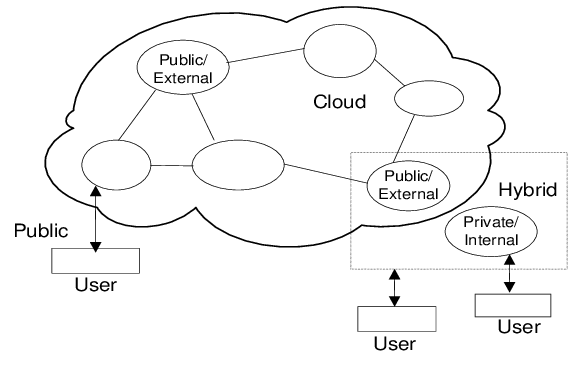
As organizations seek to avoid vendor lock-in and optimize performance, multi-cloud strategies—using services from multiple cloud providers—are gaining popularity. Similarly, hybrid cloud solutions, which combine public cloud services with private clouds or on-premises infrastructure, offer a balanced approach to security, compliance, and scalability. These strategies allow businesses to tailor their cloud environments to specific workloads and regulatory requirements.
Sustainability and Green Cloud Computing
The environmental impact of data centers has become a growing concern, with cloud providers under pressure to reduce their carbon footprint. The future of cloud services lies in sustainability, with companies investing in renewable energy sources, energy-efficient hardware, and carbon-neutral data centers. Innovations like liquid cooling, AI-driven energy optimization, and serverless architectures are reducing the environmental impact of cloud computing while maintaining performance and reliability.
The Convergence of Cloud and AI
Artificial intelligence is not just a beneficiary of cloud services—it is becoming an integral part of how cloud platforms operate. AI is being used to optimize cloud resource allocation, predict demand, detect security threats, and automate routine tasks. In turn, cloud services are making AI more accessible, enabling developers to build and deploy intelligent applications with minimal overhead. This symbiotic relationship is driving the next wave of innovation in both fields.
Quantum Computing in the Cloud
While still in its infancy, quantum computing has the potential to revolutionize fields like cryptography, drug discovery, and climate modeling. Cloud providers are beginning to offer quantum computing as a service, allowing researchers and businesses to experiment with quantum algorithms without needing specialized hardware. This democratization of quantum computing could unlock breakthroughs that were previously unimaginable.
—
The Challenges and Considerations of Cloud Adoption
Security and Privacy Concerns
Despite the many benefits of cloud services, security remains a top concern for organizations. Storing sensitive data in the cloud introduces risks such as unauthorized access, data breaches, and compliance violations. To mitigate these risks, cloud providers invest heavily in security measures such as encryption, identity and access management (IAM), and threat detection. However, organizations must also implement robust security policies, conduct regular audits, and ensure that their data handling practices comply with regulations like GDPR and HIPAA.
Vendor Lock-In and Interoperability
Adopting cloud services from a single provider can create dependency, making it difficult and costly to migrate to alternative platforms. This phenomenon, known as vendor lock-in, can limit flexibility and increase long-term costs. To avoid this, organizations are turning to open standards, containerization technologies like Docker and Kubernetes, and multi-cloud strategies that promote interoperability and portability.
Cost Management and Optimization
While cloud services offer cost savings by eliminating the need for physical infrastructure, they can also lead to unexpected expenses if not managed properly. Pay-as-you-go models can result in runaway costs if usage is not monitored and optimized. Organizations must implement cost management tools, set budget alerts, and adopt best practices like rightsizing resources and using reserved instances to control spending.
Compliance and Regulatory Hurdles
Different industries and regions have varying compliance requirements regarding data storage, processing, and transfer. For example, financial institutions must adhere to regulations like PCI DSS, while healthcare organizations must comply with HIPAA. Cloud providers offer compliance certifications and tools to help organizations meet these requirements, but it is ultimately the organization’s responsibility to ensure that their cloud deployments are compliant with applicable laws.
—
Conclusion: The Cloud Is the Future—Are You Ready?
Cloud services are no longer a futuristic concept—they are the present reality, powering the digital experiences that define our daily lives. From the apps on our phones to the global supply chains that deliver goods, cloud infrastructure is the invisible force that keeps the modern world running. As technology continues to advance, the role of cloud services will only grow more critical, enabling innovations that we are only beginning to imagine.
For businesses, adopting cloud services is not just about staying competitive—it’s about future-proofing operations in an increasingly digital world. Whether through enhancing agility, improving collaboration, or unlocking the potential of AI and IoT, the cloud offers unparalleled opportunities for growth and transformation.
The question is no longer whether to embrace cloud services, but how quickly and effectively organizations can integrate them into their strategies. The future belongs to those who can harness the power of the cloud—not as a mere tool, but as the foundational backbone of tomorrow’s digital ecosystem. The time to act is now.