The Rise of Blockchain: A Trust Revolution
For centuries, trust has been the cornerstone of human interaction, commerce, and governance. From ancient barter systems to modern banking, societies have relied on intermediaries—banks, governments, and corporations—to facilitate transactions and uphold agreements. Yet, these intermediaries often introduce inefficiencies, high costs, and vulnerabilities to fraud or corruption. Enter blockchain technology, a decentralized ledger system that promises to revolutionize trust by eliminating the need for central authorities. By leveraging cryptographic security and distributed networks, blockchain offers a transparent, immutable, and tamper-proof way to record and verify transactions. This shift is not just technological; it’s a fundamental reimagining of how trust is established in the digital age.
The origins of blockchain trace back to 2008, when an anonymous entity known as Satoshi Nakamoto introduced Bitcoin, the world’s first cryptocurrency. Nakamoto’s whitepaper outlined a peer-to-peer electronic cash system that operated without intermediaries, using a decentralized network to validate and record transactions. What made Bitcoin revolutionary wasn’t just its digital nature but its underlying blockchain—a chain of blocks, each containing a cryptographic hash of the previous block, creating an unbreakable link. This innovation laid the foundation for a new era of trustless systems, where participants could interact directly without relying on a trusted third party.
Decentralization: The Heart of Blockchain Trust
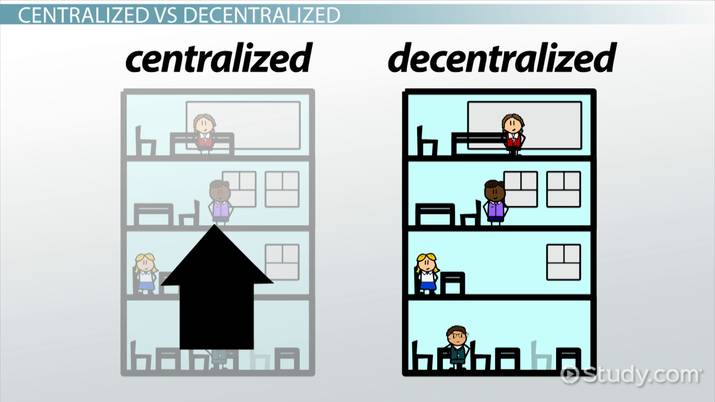
At the core of blockchain’s trust revolution is decentralization. Traditional systems depend on a single point of control, whether it’s a bank, a government, or a corporation, which can become a single point of failure. In contrast, blockchain distributes data across a network of nodes, each maintaining a copy of the ledger. This redundancy ensures that no single entity can manipulate the system, as changes must be validated by consensus across the network. For example, in a public blockchain like Bitcoin, transactions are verified by miners who compete to solve complex mathematical puzzles—a process known as Proof of Work (PoW). This energy-intensive method ensures that altering past transactions would require an impractical amount of computational power, making fraud economically unfeasible.
Decentralization also fosters inclusivity, allowing anyone with an internet connection to participate in the network. This democratization of trust is particularly impactful in regions with unstable governments or unreliable financial institutions. Projects like Ethereum and Hyperledger have expanded beyond cryptocurrencies, enabling developers to build decentralized applications (dApps) that automate agreements via smart contracts. These self-executing contracts are stored on the blockchain and triggered when predefined conditions are met, further reducing the need for intermediaries and increasing efficiency.
The Role of Consensus Mechanisms in Building Trust
Consensus mechanisms are the algorithms that enable decentralized networks to agree on the validity of transactions without a central authority. Different blockchains employ various consensus models, each with its own trade-offs between security, speed, and energy consumption. Here are some of the most prominent mechanisms:
- Proof of Work (PoW): Used by Bitcoin, PoW requires miners to solve computationally intensive puzzles to validate transactions. While highly secure, it consumes significant energy.
- Proof of Stake (PoS): Adopted by Ethereum 2.0, PoS selects validators based on the amount of cryptocurrency they “stake” as collateral. This method is more energy-efficient and scalable.
- Delegated Proof of Stake (DPoS): Used by blockchains like EOS, DPoS involves elected delegates who validate transactions, balancing speed and decentralization.
- Byzantine Fault Tolerance (BFT): Employed in private blockchains, BFT ensures consensus even if some nodes fail or act maliciously.
Each mechanism reflects a unique approach to balancing the trilemma of blockchain scalability, security, and decentralization. The choice of consensus model often depends on the blockchain’s intended use case—whether it’s a public cryptocurrency, a private enterprise solution, or a hybrid system.
Smart Contracts: Automating Trust with Code
One of blockchain’s most transformative features is the smart contract—a self-executing program that enforces the terms of an agreement when predefined conditions are met. Smart contracts are the building blocks of decentralized applications (dApps) and have applications across industries such as finance, supply chain, real estate, and healthcare. For instance, in supply chain management, a smart contract could automatically release payment to a supplier once a shipment is verified by IoT sensors, eliminating the need for manual reconciliation and reducing delays.
The potential of smart contracts extends beyond efficiency; they also introduce a new level of transparency and accountability. Since the terms of the contract are encoded on the blockchain, they are immutable and publicly verifiable, reducing the risk of disputes or fraud. However, smart contracts are not without challenges. Bugs or vulnerabilities in the code can lead to exploits, as seen in high-profile incidents like the DAO hack, where a flaw in a smart contract resulted in the loss of $60 million worth of Ether. To mitigate such risks, developers rely on rigorous auditing, formal verification, and best practices in coding to ensure the integrity of their contracts.
Platforms like Ethereum have pioneered the use of smart contracts, but newer blockchains are pushing the boundaries with improved scalability and interoperability. For example, Cardano and Polkadot are designed to support complex dApps while addressing the limitations of earlier networks, such as high gas fees and slow transaction speeds.
Blockchain Beyond Cryptocurrency: Real-World Applications
While blockchain is often associated with cryptocurrencies, its potential spans far beyond digital money. Several industries are exploring blockchain to enhance transparency, security, and efficiency in their operations. Here are some notable use cases:
- Supply Chain Management: Companies like Walmart and IBM are using blockchain to track the provenance of goods from manufacturer to consumer. This reduces counterfeiting, improves traceability, and ensures ethical sourcing.
- Healthcare: Blockchain can secure patient records, enabling seamless sharing between providers while maintaining privacy. Projects like MedRec are piloting blockchain-based health data systems.
- Voting Systems: Governments and NGOs are testing blockchain for secure, tamper-proof voting. For example, Voatz allows remote voting via smartphones while ensuring anonymity and integrity.
- Real Estate: Blockchain streamlines property transactions by digitizing titles, reducing fraud, and speeding up the closing process. Platforms like Propy enable cross-border real estate deals.
- Intellectual Property: Artists and creators are using blockchain to timestamp their work, proving ownership and enabling fair compensation. Non-fungible tokens (NFTs) have become a popular tool for this purpose.
These applications demonstrate that blockchain’s value lies not just in its ability to replace intermediaries but in its capacity to create entirely new models of interaction and ownership. As the technology matures, we can expect even more innovative use cases to emerge, from decentralized finance (DeFi) to self-sovereign identity systems.
The Challenges and Future of Blockchain Development
Despite its promise, blockchain technology faces significant hurdles that must be overcome for widespread adoption. Scalability remains a major challenge, as networks like Bitcoin and Ethereum struggle with high transaction fees and slow processing times during peak demand. Layer 2 solutions, such as the Lightning Network for Bitcoin and rollups for Ethereum, aim to address these issues by processing transactions off-chain and settling them on the main blockchain. However, these solutions introduce new complexities and potential security risks.
Interoperability is another critical issue. With thousands of blockchains in existence, each operating in silos, the ability to transfer assets and data seamlessly between networks is limited. Projects like Cosmos and Polkadot are working to create interconnected blockchain ecosystems, but achieving true interoperability remains a work in progress.
Regulatory uncertainty also poses a barrier to adoption. Governments worldwide are grappling with how to classify and regulate cryptocurrencies and blockchain applications. Some countries, like China, have banned crypto trading entirely, while others, like El Salvador, have embraced Bitcoin as legal tender. The lack of a unified regulatory framework creates challenges for businesses seeking to innovate while complying with the law. Developers must stay informed about evolving regulations to ensure their projects remain viable.
Additionally, the environmental impact of blockchain, particularly Proof of Work systems, has drawn criticism. The energy consumption of networks like Bitcoin rivals that of entire countries, raising concerns about sustainability. In response, the industry is exploring greener alternatives, such as Proof of Stake and energy-efficient consensus mechanisms. The Ethereum 2.0 upgrade, for example, reduced the network’s energy consumption by over 99% by transitioning from PoW to PoS.
The Road Ahead: What’s Next for Blockchain?
The future of blockchain development is poised for exciting advancements, driven by innovation and growing demand for decentralized solutions. Here are some trends and developments to watch:
- Scalability Solutions: Layer 2 protocols, sharding, and modular blockchains are expected to improve transaction throughput and reduce costs, making blockchain more accessible for mainstream use.
- Decentralized Finance (DeFi): DeFi platforms are revolutionizing traditional finance by offering lending, borrowing, and trading without intermediaries. As DeFi matures, it could challenge legacy financial systems.
- Central Bank Digital Currencies (CBDCs): Governments are exploring CBDCs as a digital counterpart to fiat currencies. Unlike cryptocurrencies, CBDCs are centralized and controlled by central banks, but they leverage blockchain’s efficiency and security.
- Web3 and the Decentralized Web: Web3 represents a shift from centralized platforms like Facebook and Google to a decentralized internet where users control their data. Blockchain-enabled identity solutions and decentralized storage (e.g., IPFS) are key components of this vision.
- Enterprise Blockchain: Private and permissioned blockchains are gaining traction in industries like healthcare, supply chain, and logistics, where data privacy and control are paramount.
As blockchain technology continues to evolve, its impact on society will deepen. The art of blockchain development lies not just in writing code but in designing systems that are secure, scalable, and equitable. Developers, entrepreneurs, and policymakers must collaborate to ensure that blockchain fulfills its potential as a force for good, democratizing trust and empowering individuals worldwide.
Conclusion: Trust in the Digital Age
Blockchain development is more than a technological trend; it’s a paradigm shift in how we establish and maintain trust in the digital world. By leveraging decentralization, cryptography, and smart contracts, blockchain offers a transparent and secure alternative to traditional systems plagued by inefficiency and corruption. From revolutionizing supply chains to enabling financial inclusion, the applications of blockchain are vast and transformative.
However, the journey is far from over. Challenges like scalability, regulation, and environmental impact must be addressed to unlock blockchain’s full potential. As developers and innovators rise to these challenges, we stand on the precipice of a new era—one where trust is not imposed by institutions but earned through code, consensus, and collaboration. The art of blockchain development is still in its infancy, but its promise is boundless. The question is not whether blockchain will change the world, but how soon we’ll see its transformative power in action.