The Future of Blockchain Development: A New Era of Trust
Blockchain technology has evolved from a niche concept to a foundational pillar of digital innovation. Initially designed to support cryptocurrencies like Bitcoin, its potential now extends far beyond financial transactions. Today, blockchain is reshaping industries by introducing unparalleled transparency, security, and decentralization. As we stand on the brink of a technological revolution, the future of blockchain development promises to redefine trust in the digital age.
The core appeal of blockchain lies in its ability to create tamper-proof systems where data integrity is guaranteed without the need for intermediaries. This inherent trustworthiness has attracted sectors ranging from supply chain management to healthcare, where accuracy and accountability are paramount. However, the journey toward widespread adoption is just beginning. Emerging trends and innovations are set to unlock even greater possibilities, positioning blockchain as the backbone of the next-generation internet.
Why Trust in Blockchain is Unmatched
Trust is the cornerstone of any functional society, and in the digital realm, it has often been a scarce commodity. Traditional systems rely on centralized authorities—banks, governments, and corporations—to validate transactions and vouch for data authenticity. While these systems have served us for centuries, they are not without flaws. Centralization introduces vulnerabilities such as fraud, corruption, and single points of failure. Blockchain technology addresses these challenges by distributing trust across a decentralized network of participants.
In a blockchain network, every transaction is recorded in a public ledger that is immutable and cryptographically secured. Once data is added, it cannot be altered without consensus from the majority of the network. This transparency ensures that all parties have access to the same information, reducing disputes and fostering a new level of accountability. Moreover, smart contracts—self-executing agreements coded directly into the blockchain—automate processes, eliminating the need for intermediaries and further enhancing efficiency and reliability.
The Evolution of Blockchain: From Bitcoin to Smart Contracts
Blockchain’s journey began with Bitcoin in 2009, introduced by the pseudonymous Satoshi Nakamoto. Bitcoin demonstrated that a decentralized network could securely transfer value without a central authority. However, early blockchain systems were limited by scalability issues and narrow functionality. Ethereum, launched in 2015, marked a significant leap forward by introducing smart contracts—programmable contracts that execute automatically when predefined conditions are met. This innovation expanded blockchain’s utility beyond currency, enabling decentralized applications (dApps) and decentralized finance (DeFi).
Since then, blockchain development has diversified into multiple platforms, each with unique strengths. Blockchains like Solana, Cardano, and Polkadot focus on scalability, interoperability, and energy efficiency, addressing some of the most pressing challenges in the ecosystem. Meanwhile, enterprise blockchains such as Hyperledger Fabric cater to business needs by offering permissioned networks that balance privacy with transparency. The evolution of blockchain technology reflects a broader shift toward more inclusive, efficient, and resilient digital infrastructures.
Key Innovations Shaping the Future of Blockchain
The future of blockchain development is being forged by several groundbreaking innovations that address existing limitations and open new avenues for growth. These advancements are not only enhancing the technology’s capabilities but also making it more accessible and practical for real-world applications.
Scalability Solutions
One of the most critical challenges in blockchain adoption has been scalability. Early blockchains like Bitcoin and Ethereum could process only a handful of transactions per second, far below the capacity required for mainstream use. Several solutions are emerging to tackle this issue:
- Layer 2 Protocols: Technologies such as the Lightning Network (for Bitcoin) and Rollups (for Ethereum) process transactions off-chain before settling them on the main blockchain. This reduces congestion and significantly increases throughput.
- Sharding: This technique splits a blockchain into smaller, manageable pieces called shards, each capable of processing its own transactions. Networks like Ethereum 2.0 are implementing sharding to improve scalability.
- Alternative Consensus Mechanisms: Proof-of-Stake (PoS) and other consensus algorithms consume less energy and process transactions faster than traditional Proof-of-Work (PoW) systems. Ethereum’s transition to PoS, known as “The Merge,” is a prime example of this shift.
Interoperability and Cross-Chain Bridges
As blockchain ecosystems proliferate, the need for seamless communication between different networks becomes increasingly important. Interoperability solutions enable assets and data to move across blockchains, fostering a more connected and versatile ecosystem. Some notable developments include:
- Cross-Chain Bridges: These protocols allow users to transfer assets from one blockchain to another. For example, a user can move Bitcoin to the Ethereum network to interact with DeFi applications. Bridges like Polygon’s PoS bridge and Cosmos’ Inter-Blockchain Communication (IBC) protocol facilitate these transfers.
- Blockchain Agglomeration: Platforms like Polkadot and Cosmos enable multiple blockchains to operate under a single ecosystem, sharing security and resources while maintaining sovereignty.
- Standardized Protocols: Initiatives such as the Interledger Protocol (ILP) and the Token Taxonomy Framework (TTF) aim to create universal standards for blockchain interactions, making it easier for different systems to work together.
Enhanced Privacy and Security
While blockchain’s transparency is a strength, privacy concerns have led to the development of solutions that protect sensitive data while maintaining the integrity of the network. Innovations in this area include:
- Zero-Knowledge Proofs (ZKPs): These cryptographic methods allow one party to prove knowledge of a piece of information without revealing the information itself. ZKPs are used in privacy-focused blockchains like Zcash and are being integrated into platforms like Ethereum for secure transactions.
- Confidential Transactions: Technologies such as Mimblewimble, adopted by blockchains like Grin and Beam, obfuscate transaction details while still ensuring they are valid.
- Decentralized Identity (DID): Blockchain-based identity solutions give users control over their personal data, allowing them to share only what is necessary for a transaction while maintaining privacy.
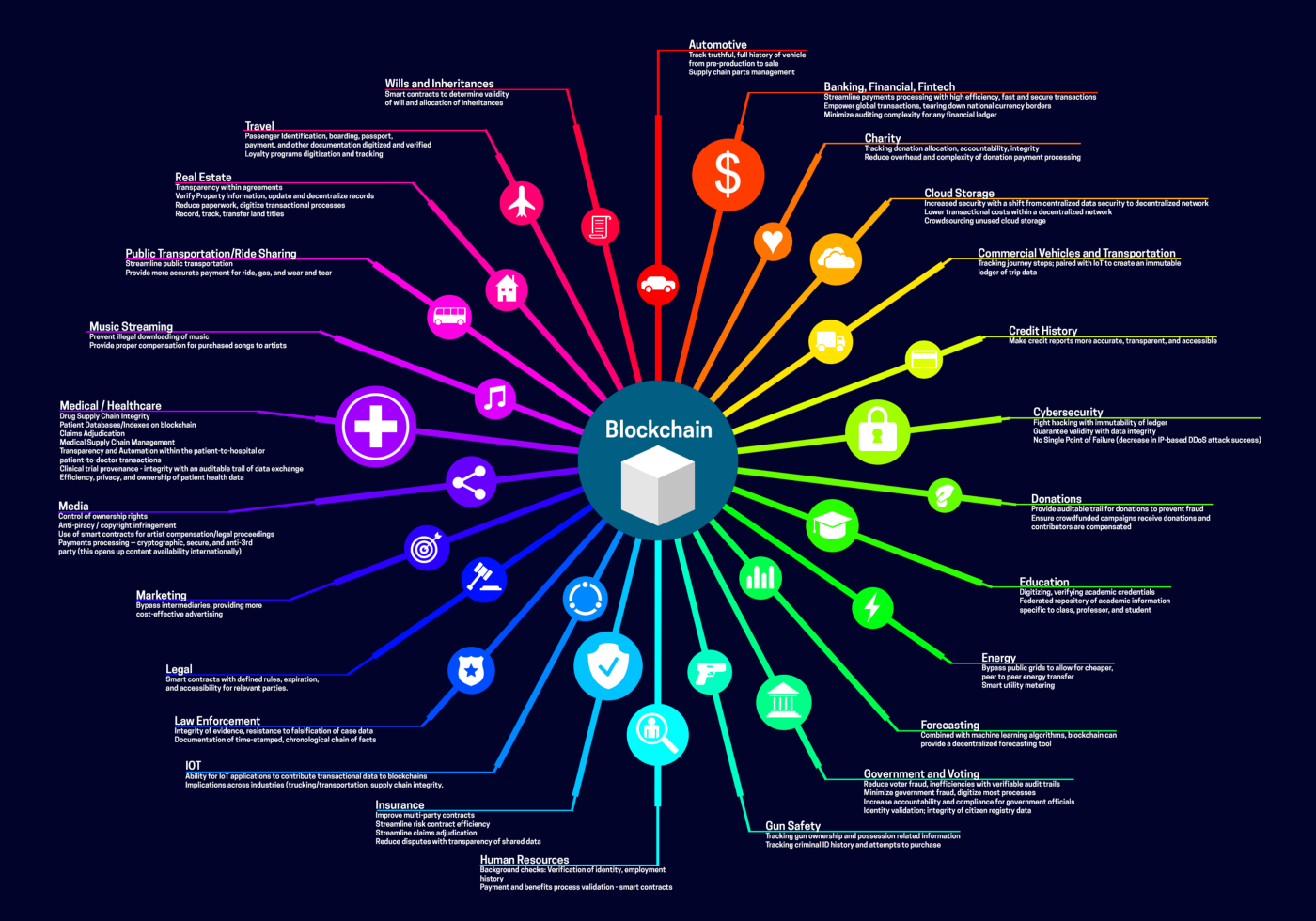
Blockchain Beyond Cryptocurrency: Real-World Applications
While cryptocurrencies were the first major application of blockchain, the technology’s potential extends into virtually every sector. Organizations are leveraging blockchain to enhance efficiency, transparency, and trust in ways previously unimaginable. Below are some of the most impactful real-world applications of blockchain technology today.
Supply Chain Management
Supply chains are complex, involving multiple stakeholders, geographical locations, and regulatory requirements. Blockchain simplifies this process by providing a single, immutable record of a product’s journey from manufacturer to consumer. Key benefits include:
- Traceability: Consumers and businesses can track the origin and movement of goods in real time, ensuring authenticity and reducing the risk of counterfeit products.
- Automation: Smart contracts can automatically trigger payments or alerts when certain conditions are met, such as the delivery of goods or the completion of a quality check.
- Compliance: Blockchain’s immutable ledger ensures that all transactions and processes adhere to regulatory standards, simplifying audits and reducing the risk of non-compliance.
Companies like Walmart and IBM Food Trust have implemented blockchain to improve food safety and traceability, demonstrating the technology’s ability to create more resilient supply chains.
Healthcare
The healthcare industry handles vast amounts of sensitive data, and blockchain offers a secure and efficient way to manage patient records, clinical trials, and drug supply chains. Benefits include:
- Patient Data Management: Blockchain enables patients to own and control their medical records, sharing them securely with healthcare providers as needed. This reduces fragmentation and improves the accuracy of diagnoses.
- Drug Authentication: Counterfeit drugs are a global health crisis. Blockchain can track pharmaceuticals from manufacturer to pharmacy, ensuring that patients receive authentic medications.
- Clinical Trials: Blockchain enhances the transparency and integrity of clinical trial data, preventing fraud and ensuring that results are accurate and reproducible.
Projects like MedRec and BurstIQ are at the forefront of applying blockchain in healthcare, offering solutions that prioritize patient privacy and data security.
Financial Services
The financial sector has been one of the earliest and most enthusiastic adopters of blockchain technology. Beyond cryptocurrencies, blockchain is transforming traditional finance through:
- Decentralized Finance (DeFi): DeFi platforms use blockchain to recreate traditional financial services such as lending, borrowing, and trading without intermediaries. This democratizes access to financial tools and reduces costs for users.
- Cross-Border Payments: Blockchain enables faster, cheaper, and more transparent cross-border transactions compared to traditional banking systems. Companies like Ripple and Stellar are leveraging blockchain to streamline international payments.
- Tokenization: Assets such as real estate, stocks, and commodities can be represented as digital tokens on a blockchain, enabling fractional ownership and easier trading.
Institutions like JPMorgan and Goldman Sachs are exploring blockchain to improve back-office operations, reduce fraud, and enhance customer experiences.
Government and Public Sector
Governments worldwide are recognizing blockchain’s potential to enhance transparency, reduce corruption, and improve public services. Applications include:
- Voting Systems: Blockchain can create tamper-proof voting systems where votes are recorded immutably, ensuring election integrity and reducing the risk of fraud.
- Land Registry: Blockchain provides a secure and transparent way to record property ownership, preventing disputes and fraud in land transactions.
- Identity Management: Digital identity solutions based on blockchain can help governments issue secure, verifiable IDs to citizens, reducing identity theft and streamlining access to services.
Countries like Estonia and Dubai are pioneering blockchain adoption in the public sector, setting examples for other nations to follow.
Challenges and Roadblocks in Blockchain Adoption
Despite its transformative potential, blockchain technology still faces several challenges that must be addressed before widespread adoption can become a reality. These obstacles range from technical limitations to regulatory uncertainties and public perception issues.
Technical Limitations
While innovations like Layer 2 solutions and sharding are improving scalability, many blockchains still struggle with:
- Throughput: Most public blockchains cannot match the transaction speeds of traditional payment systems like Visa or Mastercard, which process thousands of transactions per second.
- Energy Consumption: Proof-of-Work blockchains, such as Bitcoin, have faced criticism for their high energy usage. While PoS and other consensus mechanisms offer more sustainable alternatives, the perception of blockchain as energy-intensive persists.
- User Experience: Blockchain interfaces are often complex and intimidating for non-technical users. Improving wallet interfaces, transaction processes, and educational resources is essential for mass adoption.
Regulatory and Legal Uncertainties
Blockchain operates in a rapidly evolving regulatory landscape, with governments worldwide grappling to define its legal status and implications. Key challenges include:
- Compliance: Blockchain’s decentralized nature makes it difficult to apply traditional regulatory frameworks. Issues such as anti-money laundering (AML) and know-your-customer (KYC) requirements need to be adapted for decentralized systems.
- Jurisdictional Conflicts: Different countries have varying stances on blockchain and cryptocurrencies. For example, China has banned cryptocurrency trading, while El Salvador has adopted Bitcoin as legal tender. This fragmentation creates uncertainty for businesses operating across borders.
- Taxation: The tax treatment of blockchain assets and transactions remains unclear in many jurisdictions, leading to compliance challenges for users and businesses.
Security Risks and Scams
While blockchain itself is highly secure, the ecosystem around it is not immune to risks. Common security concerns include:
- Smart Contract Vulnerabilities: Flaws in smart contract code can be exploited by hackers, leading to significant financial losses. High-profile incidents, such as the DAO hack on Ethereum, underscore the need for rigorous auditing and testing.
- Exchange Hacks: Centralized exchanges, which hold large amounts of user funds, are frequent targets for cyberattacks. The Mt. Gox hack in 2014, where nearly 850,000 Bitcoins were stolen, remains one of the most infamous examples.
- Ponzi Schemes and Rug Pulls: The decentralized and pseudonymous nature of blockchain makes it attractive for fraudulent schemes. Investors must exercise caution and conduct thorough due diligence before participating in blockchain-based projects.
Addressing these challenges requires collaboration between developers, regulators, and the broader community to establish best practices, enhance security measures, and foster trust in the ecosystem.
The Role of Developers and Communities in Shaping Blockchain’s Future
Blockchain technology’s potential is not solely determined by its underlying code but also by the communities and developers who build upon it. The collaborative and open-source nature of blockchain development has been instrumental in driving innovation and adoption. Developers play a pivotal role in addressing challenges, creating new applications, and advocating for the technology’s benefits.
Open-source projects, such as Bitcoin and Ethereum, rely on global communities of developers who contribute to the codebase, propose upgrades, and troubleshoot issues. This decentralized approach to development ensures that no single entity controls the direction of the technology, aligning with blockchain’s ethos of decentralization. Platforms like GitHub facilitate collaboration, allowing developers to contribute to projects, suggest improvements, and fork code for their own innovations.
Beyond coding, developers are also responsible for educating the public and businesses about blockchain’s capabilities. Outreach programs, hackathons, and developer conferences foster a culture of learning and experimentation. For example, Ethereum’s Devcon and Bitcoin’s annual conference bring together thousands of developers, entrepreneurs, and enthusiasts to share knowledge and discuss the future of blockchain.
Moreover, the rise of decentralized autonomous organizations (DAOs) exemplifies how communities can govern and fund blockchain projects collectively. DAOs enable stakeholders to vote on proposals, allocate resources, and shape the development roadmap of a project. This model not only democratizes decision-making but also ensures that the technology evolves in response to the needs of its users.
The developer community’s role extends to advocacy and policy engagement. As blockchain technology intersects with regulatory frameworks, developers are increasingly participating in discussions with policymakers to shape laws that foster innovation while protecting consumers. Initiatives like the Blockchain Association and the Chamber of Digital Commerce work to promote blockchain-friendly legislation and educate lawmakers about the technology’s benefits.
Emerging Trends: What’s Next for Blockchain Development?
The blockchain landscape is constantly evolving, with new trends and technologies emerging that promise to redefine its capabilities. Keeping pace with these developments is essential for businesses, investors, and enthusiasts looking to capitalize on blockchain’s potential. Below are some of the most promising trends shaping the future of blockchain development.
Decentralized Autonomous Organizations (DAOs)
DAOs represent a paradigm shift in organizational structures by leveraging blockchain to create decentralized, community-driven entities. Unlike traditional corporations, DAOs operate without a central authority, with decisions made through transparent voting mechanisms encoded in smart contracts. This model offers several advantages:
- Transparency: All decisions and transactions are recorded on the blockchain, ensuring accountability and reducing the risk of corruption.
- Inclusivity: Anyone holding the DAO’s governance tokens can participate in decision-making, democratizing access to power and resources.
- Efficiency: Automated governance through smart contracts reduces bureaucracy and streamlines operations.
DAOs are already making waves in sectors like venture capital, where community members pool funds to invest in startups, and in the arts, where creators and collectors collaborate on projects. As the technology matures, DAOs could replace traditional corporate structures in various industries, offering a more equitable and efficient alternative.
Blockchain and the Metaverse
The metaverse—a virtual, interconnected universe where users can interact, work, and play—is one of the most talked-about trends in technology. Blockchain is poised to play a critical role in the metaverse by enabling true ownership of digital assets, interoperability between virtual worlds, and decentralized economies. Key developments include:
- NFTs (Non-Fungible Tokens): NFTs allow users to prove ownership of digital items such as art, virtual real estate, and in-game assets. This creates new economic models where creators can monetize their work and users can trade assets across different platforms.
- Decentralized Virtual Worlds: Platforms like Decentraland and The Sandbox use blockchain to create immersive virtual environments where users can own land, build experiences, and engage in commerce.
- Interoperability Protocols: To prevent fragmentation, blockchain-based interoperability protocols are being developed to allow assets and identities to move seamlessly between different metaverse platforms.
The convergence of blockchain and the metaverse is not just a technological evolution but a cultural one, redefining how we interact with digital spaces and each other.
Green Blockchain and Sustainable Development
As environmental concerns take center stage globally, the blockchain industry is under pressure to adopt more sustainable practices. The energy-intensive nature of PoW blockchains has led to criticism, but the shift toward greener alternatives is gaining momentum:
- Proof-of-Stake (PoS): PoS blockchains like Ethereum 2.0 and Cardano consume significantly less energy than PoW systems by eliminating the need for energy-intensive mining. Ethereum’s transition to PoS, for instance, reduced its energy consumption by approximately 99.95%.
- Renewable Energy Integration: Some blockchain projects are exploring the use of renewable energy sources, such as solar or wind power, to mine cryptocurrencies. For example, the Crypto Climate Accord aims to make the cryptocurrency industry powered entirely by renewable energy by 2030.
- Carbon Offsetting: Projects like KlimaDAO leverage blockchain to facilitate carbon offsetting, allowing individuals and businesses to invest in environmental initiatives that reduce or capture carbon emissions.
The push for sustainability is not only an ethical imperative but also a business opportunity. As consumers and investors increasingly prioritize eco-friendly technologies, green blockchains stand to gain broader acceptance and support.
Quantum-Resistant Blockchain
Quantum computing poses a significant threat to blockchain’s cryptographic foundations. Traditional cryptographic algorithms, such as those used in Bitcoin and Ethereum, rely on the computational difficulty of certain mathematical problems. Quantum computers, however, could potentially solve these problems much faster, compromising the security of blockchain networks. To address this looming challenge, researchers are developing quantum-resistant blockchain solutions:
- Post-Quantum Cryptography (PQC): PQC algorithms are designed to be secure against quantum computing attacks. Blockchains incorporating PQC, such as those based on lattice-based or hash-based cryptography, are being explored to future-proof the technology.
- Hybrid Consensus Models: Some projects are experimenting with hybrid consensus mechanisms that combine traditional cryptographic methods with quantum-resistant alternatives to enhance security.
While quantum computing is still in its infancy, the blockchain community is proactively preparing for a post-quantum future to ensure the long-term viability of decentralized systems.
Preparing for the Blockchain Revolution: How Businesses and Individuals Can Get Involved
The blockchain revolution is not a distant future but an unfolding reality. For businesses, investors, and individuals, staying informed and actively participating in the ecosystem can unlock significant opportunities. Whether you’re a developer, entrepreneur, or simply a curious enthusiast, there are several ways to engage with blockchain technology and position yourself at the forefront of this transformative movement.
For Businesses
Businesses across industries are exploring blockchain to enhance efficiency, reduce costs, and create new revenue streams. Here’s how companies can get started:
- Identify Use Cases: Begin by assessing your business’s pain points and exploring how blockchain can address them. Whether it’s supply chain transparency, secure data management, or automated payments, there’s likely a blockchain solution tailored to your needs.
- Partner with Experts: Blockchain development requires specialized knowledge. Collaborate with blockchain development firms or hire in-house experts to design and implement solutions tailored to your objectives.
- Join Consortia: Industry consortia like the Enterprise Ethereum Alliance (EEA) and Hyperledger provide resources, networking opportunities, and collaborative projects to help businesses adopt blockchain.
- Experiment with Pilot Projects: Before rolling out a full-scale blockchain solution, conduct pilot projects to test feasibility, gather feedback, and refine your approach. Many companies start with permissioned blockchains to control access and ensure compliance.
Industries such as finance, healthcare, and logistics are already reaping the benefits of blockchain adoption. By taking a proactive approach, businesses can gain a competitive edge and future-proof their operations.
For Developers
For developers, blockchain offers a vast playground for innovation, with opportunities to build decentralized applications, smart contracts, and new protocols. Here’s how to dive into blockchain development:
- Learn the Basics: Start by understanding the fundamentals of blockchain technology, including consensus mechanisms, smart contracts, and cryptographic principles. Resources like the Ethereum Developer Documentation, Bitcoin’s whitepaper, and online courses on platforms like Coursera and Udemy can provide a solid foundation.
- Choose a Blockchain Platform: Pick a blockchain platform to specialize in. Ethereum, Solana, and Polkadot are popular choices for building dApps, while Hyperledger Fabric is ideal for enterprise solutions. Each platform has its own tools, programming languages, and community support.
- Build and Contribute: Start by building simple smart contracts or dApps and gradually take on more complex projects. Contribute to open-source blockchain projects on GitHub to gain experience and collaborate with other developers.
- Stay Updated: The blockchain space evolves rapidly. Follow industry news, attend conferences like Devcon or EthCC, and join developer communities on platforms like Discord and Reddit to stay informed about the latest trends and tools.
Developers who master blockchain technology will be well-positioned to lead the next wave of digital innovation, shaping the future of decentralized systems.
For Investors
Investors are increasingly looking to blockchain and cryptocurrencies as alternative asset classes with high growth potential. Whether you’re interested in early-stage projects or established cryptocurrencies, here’s how to navigate the investment landscape:
- Diversify Your Portfolio: Blockchain investments span cryptocurrencies, blockchain-based companies, and infrastructure projects. Diversifying across these categories can mitigate risk and maximize opportunities.
- Research Thoroughly: The blockchain space is rife with scams and overhyped projects. Conduct due diligence by examining a project’s team, technology, use case, and community engagement. Tools like CoinGecko and Messari provide valuable insights into project metrics and market trends.
- Consider Venture Capital: Many venture capital firms specialize in blockchain investments. Participating in blockchain-focused VC funds or accelerator programs can provide access to high-potential startups and expert guidance.
- Stay Cautious: The volatility of cryptocurrency markets requires a cautious approach. Only invest what you can afford to lose, and consider dollar-cost averaging to reduce the impact of market fluctuations.
Investing in blockchain is not just about financial returns but also about supporting the development of groundbreaking technologies that have the potential to reshape industries.
For Enthusiasts and Everyday Users
Blockchain technology isn’t just for businesses and developers—it has the power to empower individuals by giving them greater control over their digital lives. Here’s how anyone can engage with blockchain:
- Use Cryptocurrencies: Start by using cryptocurrencies for everyday transactions or as a store of value. Platforms like Coinbase, Binance, and Kraken make it easy to buy, sell, and store digital assets securely.
- Explore DeFi: Decentralized finance offers opportunities to earn interest, borrow, or lend money without traditional financial institutions. Platforms like Uniswap, Aave, and Compound provide user-friendly interfaces for DeFi interactions.
- Create and Trade NFTs: If you’re an artist, musician, or content creator, consider minting and selling NFTs on platforms like OpenSea or Rarible. For collectors, NFT marketplaces offer a new way to discover and own digital art and collectibles.
- Engage with DAOs: Participate in decentralized autonomous organizations to have a say in the projects and communities you care about. Platforms like Aragon and Colony provide tools for creating and joining DAOs.
- Educate Yourself and Others: Share your knowledge about blockchain with friends, family, and colleagues. Hosting workshops, writing blogs, or creating content on social media can help demystify the technology and foster wider adoption.
The blockchain revolution is a collective effort, and every individual has a role to play in shaping its future. By getting involved, you can contribute to a more transparent, decentralized, and equitable digital world.
Conclusion: Embracing the Blockchain-Powered Future
Blockchain technology stands at the precipice of revolutionizing how we trust, interact, and transact in the digital world. From its humble beginnings as the backbone of Bitcoin to its current role as a transformative force across industries, blockchain has demonstrated its potential to create more transparent, secure, and efficient systems. The future of blockchain development is not just about technological advancement but about reimagining the very foundations of trust, ownership, and collaboration.
As we move forward, the challenges of scalability, regulation, and security must be addressed with innovation and collaboration. Developers, businesses, governments, and individuals all have a part to play in unlocking blockchain’s full potential. The journey toward a decentralized future is still in its early stages, but the momentum is undeniable. With each new breakthrough, from quantum-resistant cryptography to interoperable metaverse platforms, we edge closer to a world where trust is not assumed but guaranteed.
The blockchain revolution is more than a technological shift—it’s a cultural and economic transformation that empowers individuals and communities. By embracing this technology, we can build systems that prioritize transparency, fairness, and resilience. Whether you’re a developer building the next generation of decentralized applications, a business integrating blockchain into your operations, or an enthusiast exploring the possibilities, your involvement is crucial to shaping a future where trust is decentralized, and opportunity is accessible to all.
The time to engage with blockchain is now. The future is being built one block at a time, and everyone has the chance to contribute to this monumental change. Let’s revolutionize trust together.