The Crystal Ball of Data: Predictive Modeling’s Power to See the Future
In a world where data is often called the new oil, predictive modeling stands as the refinery that transforms raw information into actionable foresight. This powerful discipline allows businesses, governments, and even individuals to peer into the future—not with supernatural clairvoyance, but with the rigor of mathematics, statistics, and machine learning. By analyzing historical data and identifying patterns, predictive models can forecast everything from stock market trends to the likelihood of a customer churning. The ability to anticipate future events with a measurable degree of accuracy has revolutionized industries, making predictive modeling one of the most transformative tools of the digital age.
How Predictive Modeling Works: The Alchemy of Data and Algorithms
At its core, predictive modeling is a process of creating, testing, and validating a mathematical representation—a model—of future outcomes based on historical data. The journey begins with data collection, where vast datasets are gathered from sources such as customer transactions, social media activity, or sensor readings. This raw data is then cleaned and preprocessed to remove noise and inconsistencies, ensuring that the model is built on a solid foundation.
Once the data is prepared, the next step is feature engineering, where relevant variables (or “features”) are selected and transformed to improve the model’s predictive power. For example, in a model predicting loan defaults, features might include credit score, income level, and employment history. The model is then trained using a subset of the data, where it learns the relationships between these features and the target outcome. Algorithms such as linear regression, decision trees, or neural networks are employed to find patterns in the data that can be generalized to new, unseen scenarios.
The final stage is validation and testing, where the model’s performance is evaluated using metrics like accuracy, precision, recall, or the area under the ROC curve. This ensures that the model not only fits the training data well but also generalizes effectively to real-world situations. The result is a tool that can forecast outcomes with surprising precision, turning data into a crystal ball of sorts—one that operates on logic rather than magic.
The Many Faces of Predictive Modeling: Applications Across Industries
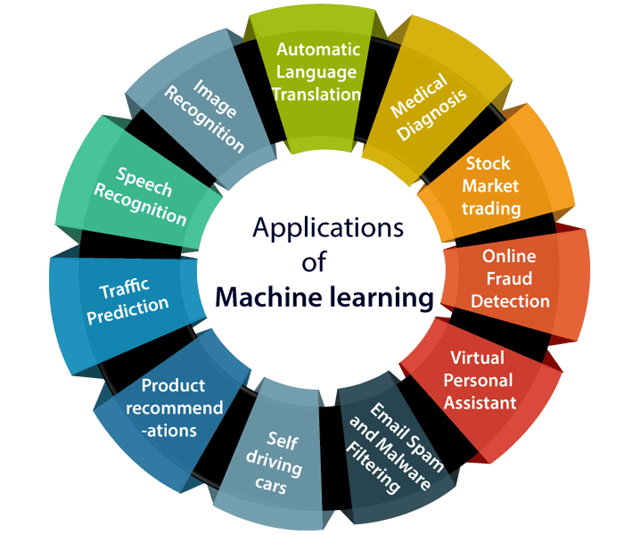
Predictive modeling is not a one-size-fits-all solution; its applications are as diverse as the industries it serves. Below are some of the most impactful ways predictive modeling is being used today:
- Healthcare: Predictive models help hospitals forecast patient readmissions, identify individuals at high risk for chronic diseases, and even predict the spread of epidemics. For instance, machine learning models can analyze a patient’s medical history and lifestyle factors to estimate their likelihood of developing diabetes or heart disease.
- Finance: In the financial sector, predictive modeling is the backbone of algorithmic trading, fraud detection, and credit scoring. Banks use models to assess the risk of loan applicants, while insurance companies leverage them to predict claim likelihood. Fraud detection systems, for example, analyze transaction patterns in real time to flag suspicious activities before they escalate.
- Retail and E-Commerce: Retailers harness predictive modeling to optimize inventory management, personalize marketing campaigns, and enhance customer experiences. Recommendation engines, like those used by Amazon or Netflix, rely on predictive algorithms to suggest products or content based on a user’s past behavior. Dynamic pricing models adjust prices in real time based on demand, competition, and even weather patterns.
- Manufacturing: In the industrial sector, predictive maintenance uses sensor data to forecast equipment failures before they occur. By analyzing vibration, temperature, and other operational metrics, manufacturers can schedule maintenance proactively, reducing downtime and saving millions in potential losses.
- Public Policy and Safety: Governments and law enforcement agencies use predictive policing to allocate resources more effectively and prevent crimes before they happen. While this application is ethically complex, it demonstrates the potential of predictive modeling to shape societal outcomes when used responsibly.
The Power and Pitfalls: Benefits and Challenges of Predictive Modeling
Predictive modeling offers a myriad of benefits, but it is not without its challenges. On the positive side, the advantages are compelling:
- Proactive Decision-Making: Instead of reacting to events after they occur, organizations can take preemptive actions. For example, a retailer might adjust inventory levels before a holiday rush, or a healthcare provider might intervene early with a high-risk patient.
- Resource Optimization: Predictive models help businesses allocate resources more efficiently. In manufacturing, this means fewer unexpected breakdowns; in marketing, it means higher conversion rates with targeted campaigns.
- Risk Mitigation: In finance and insurance, predictive modeling reduces exposure to risk by identifying potential threats before they materialize. This leads to more stable markets and lower costs for consumers.
- Personalization at Scale: Consumers today expect tailored experiences, and predictive modeling enables companies to deliver them. Whether it’s a streaming service recommending a show or a bank offering a personalized loan rate, the technology enhances customer satisfaction.
However, predictive modeling is not infallible, and its limitations must be acknowledged:
- Data Quality and Bias: Garbage in, garbage out. If the training data is incomplete, biased, or unrepresentative, the model’s predictions will be flawed. For example, a hiring algorithm trained on predominantly male resumes might inadvertently discriminate against female candidates.
- Overfitting: A model that performs exceptionally well on training data but poorly on new data is said to be overfitted. This happens when the model memorizes noise instead of learning generalizable patterns.
- Explainability: Many advanced models, particularly deep learning neural networks, operate as “black boxes.” Their decisions are difficult to interpret, making it challenging to explain why a model arrived at a specific prediction. This can be problematic in regulated industries like healthcare or finance.
- Ethical Concerns: Predictive modeling can reinforce societal biases or be used for manipulative purposes. For instance, microtargeting in political campaigns can exploit psychological vulnerabilities, while predictive policing may disproportionately target certain communities.
Building a Predictive Model: A Step-by-Step Guide
For those looking to harness the power of predictive modeling, here’s a practical roadmap to get started:
- Define the Objective: Clearly articulate the problem you’re trying to solve. Are you predicting customer churn, stock prices, or equipment failures? The goal will shape every subsequent step.
- Gather and Prepare Data: Collect relevant datasets and clean them to remove duplicates, handle missing values, and normalize formats. Tools like Python’s Pandas library can streamline this process.
- Explore and Visualize: Use exploratory data analysis (EDA) to understand the data’s structure, relationships, and anomalies. Visualizations like histograms, scatter plots, and heatmaps can reveal insights that raw data cannot.
- Feature Engineering: Select and transform features to improve model performance. This might involve scaling numerical values, encoding categorical variables, or creating new derived features.
- Choose a Model: Select an algorithm that aligns with your data and problem type. For classification tasks, options include logistic regression or random forests; for regression tasks, linear regression or gradient boosting might be more suitable.
- Train and Validate: Split your data into training and testing sets. Train the model on the training data and evaluate its performance on the testing set using appropriate metrics. Techniques like cross-validation can help ensure robustness.
- Optimize and Deploy: Fine-tune the model by adjusting hyperparameters (e.g., learning rate, tree depth) to improve performance. Once satisfied, deploy the model into a production environment where it can make real-time predictions.
- Monitor and Iterate: Predictive models degrade over time as data patterns evolve. Continuously monitor performance and retrain the model with new data to maintain accuracy.
The Future of Predictive Modeling: Trends to Watch
As technology evolves, so too does the field of predictive modeling. Several emerging trends are poised to shape its future:
- Explainable AI (XAI): With growing regulatory scrutiny, there’s a push for models that are not only accurate but also interpretable. Techniques like SHAP (SHapley Additive exPlanations) and LIME (Local Interpretable Model-agnostic Explanations) help demystify black-box models, making them more transparent and trustworthy.
- Automated Machine Learning (AutoML): Tools like Google’s AutoML and DataRobot automate the end-to-end process of model development, from data preprocessing to hyperparameter tuning. This democratizes predictive modeling, allowing non-experts to build sophisticated models without deep coding knowledge.
- Real-Time Predictive Analytics: The rise of edge computing and 5G networks enables models to process data and make predictions in real time. This is particularly valuable in industries like autonomous vehicles, where split-second decisions are critical.
- Federated Learning: This privacy-preserving technique allows models to be trained across decentralized devices (e.g., smartphones) without sharing raw data. It’s a game-changer for industries like healthcare, where data sensitivity is paramount.
- Quantum Machine Learning: As quantum computing matures, it promises to revolutionize predictive modeling by solving complex problems exponentially faster than classical computers. While still in its infancy, quantum machine learning could unlock new frontiers in fields like drug discovery and financial modeling.
Conclusion: The Age of Data-Driven Foresight
Predictive modeling is more than just a technological marvel—it’s a paradigm shift in how we understand and interact with the world. By turning data into foresight, it empowers organizations to make smarter decisions, mitigate risks, and uncover opportunities that would otherwise remain hidden. Yet, with great power comes great responsibility. As predictive models become increasingly embedded in our daily lives, it’s crucial to address ethical concerns, ensure data integrity, and prioritize transparency.
The crystal ball of data is not a promise of infallible predictions, but a tool to navigate uncertainty with greater confidence. In an era defined by data, predictive modeling stands as our most reliable guide to the future—one algorithm at a time.